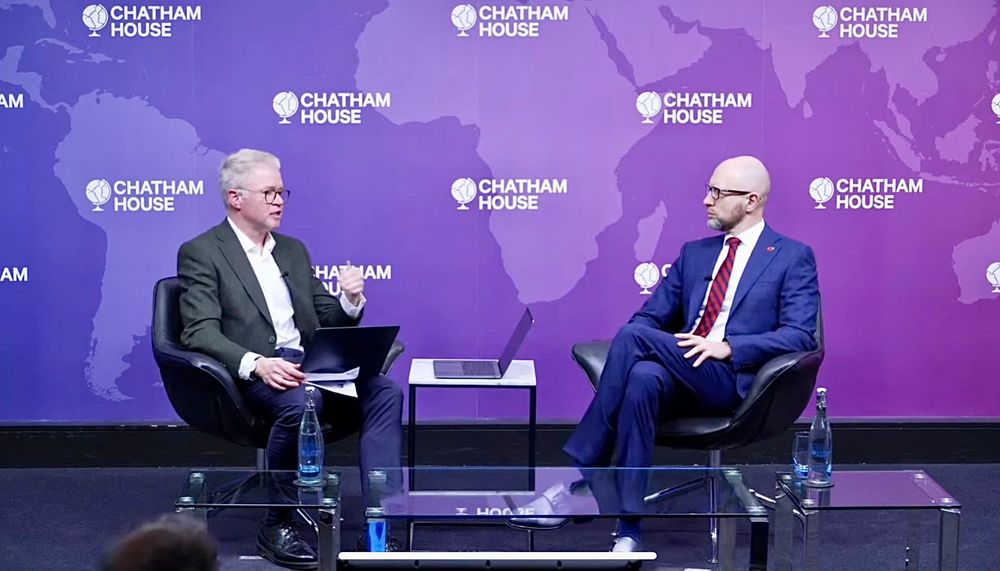
Russia may back down in the war against Ukraine if the West provides Kyiv with additional ammunition, weapons and financial aid, and steps up pressure on Moscow and Beijing. This was stated by Arseniy Yatsenyuk, Chairman of the Kyiv Security Forum and former Prime Minister of Ukraine, during a discussion entitled ‘Russia–Ukraine War: Who Will Break First?’ at Chatham House, the Royal Institute of International Affairs.
“No doubt, Russia will break first if the entire Western world provides additional ammo and tools for Ukraine to make Russia break. And it is in our power to make it,” Yatsenyuk emphasised.
According to him, Russia still has sufficient resources to continue the war, particularly thanks to additional revenue from oil exports. Yatsenyuk noted that the war in Iran has brought the Russian budget around US$27 billion in direct additional revenue.
The KSF Chairman also highlighted the danger of large-scale Russian attacks on Ukraine’s energy infrastructure. He said the Kremlin aims to render Kyiv and other major cities uninhabitable.
“We will survive this winter. It’s going to be a harsh winter. And Putin believes that he can use this winter as leverage to drive us to capitulate,” Yatsenyuk emphasised.
Apart from that, he called on European partners to ensure continued financial support for Ukraine, stressing that without it, victory in the war is impossible.
“We are not just begging for cash. We are asking for help to survive. Because we are fighting for our own lives. And there is an ongoing narrative that we are fighting for Europe. We are fighting for ourselves as Ukrainians. But we are defending Europe. It is the truth,” Yatsenyuk stated.
The Chairman of the KSF also noted that the EU had managed to provide financial support to Ukraine despite the drop in US support, and expressed hope that European partners would continue to find the necessary resources.
Chatham House, the Royal Institute of International Affairs, is one of the world’s most authoritative independent think tanks, specialising in international relations and global security issues.
The discussion was moderated by Ben Hall, Europe editor at the Financial Times.